Göbekli Tepe and the Origins of Science – IV – Martin Sweatman
Overview
Göbekli Tepe and the Origins of Science – IV
***
***
Göbekli Tepe and the Origins of Science – IV
6. Why Göbekli Tepe Matters
The night sky was humanity’s first laboratory. Unlike the seasons, which change gradually, or the weather, which can be unpredictable, the movements of the Sun, Moon and stars are highly regular. Anyone who watches them carefully soon notices patterns.
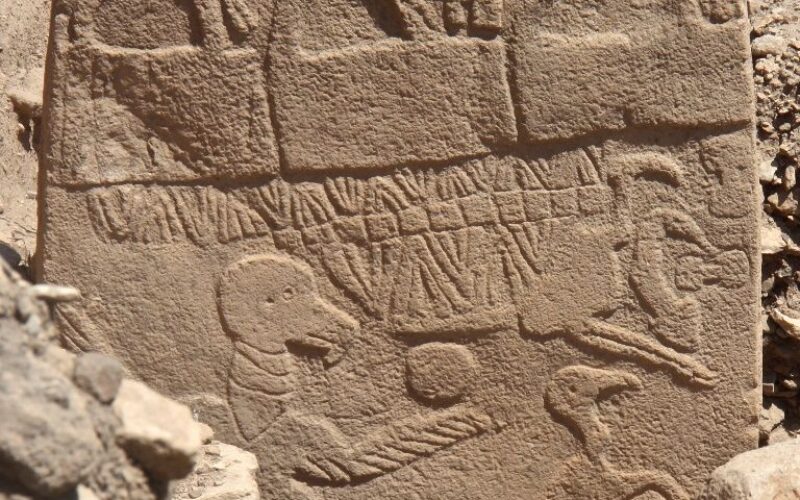
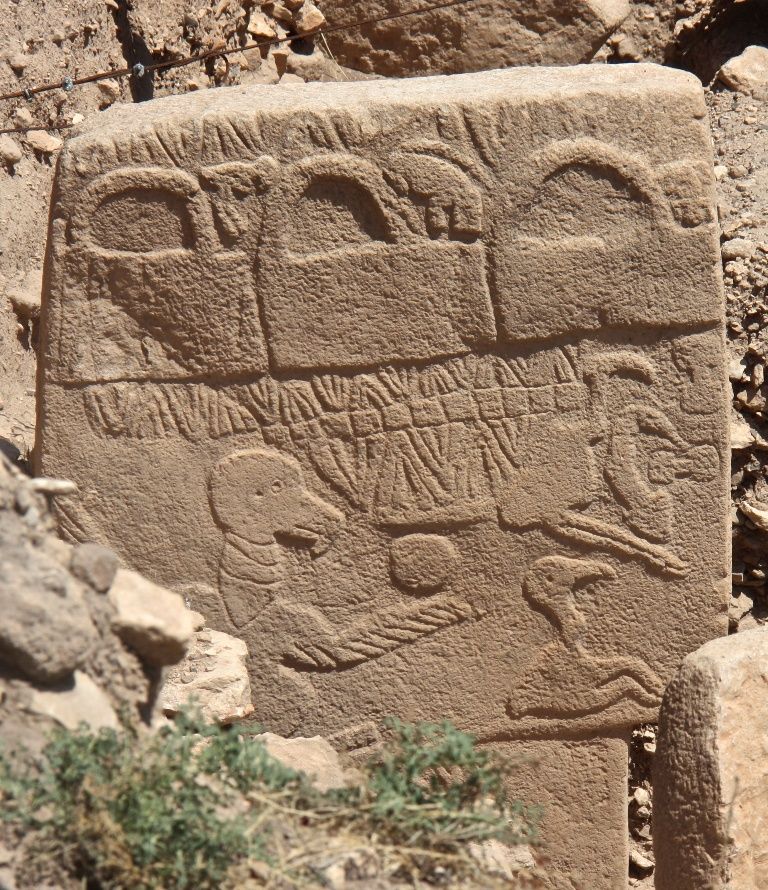
However, knowledge becomes much more powerful when it can be measured and recorded. The astronomical knowledge on Pillar 43 represents precisely that step. No longer is important knowledge about the natural world encoded only in stories or rituals. It is quantified, treated arithmetically and recorded, preserving that knowledge for future generations. Memory alone is fallible, but the information on Pillar 43 is practically permanent. This is clear evidence for scientific ways of thinking.
Furthermore, that knowledge is expressed in an efficient and universal way that should allow anyone with a basic knowledge of astronomy to decode it. Pillar 43 can even be understood by people (like us) far into the future, when stories of the catastrophic events it memorialises and the constellations it uses are changed beyond almost all recognition. It is a very clever device indeed.
Rethinking the Origins of Science
Göbekli Tepe has already transformed archaeology once. Before its discovery, few archaeologists imagined that hunter-gatherer communities could organise construction projects on such a monumental scale. The site demonstrated that they could.
The astronomical interpretation explored here raises the possibility of a second transformation. Perhaps systematic observation of the heavens and arithmetic methods for tracking time were already being developed before farming became fully established. Perhaps symbolic systems capable of preserving complex ideas preceded writing by several millennia.
If so, the familiar sequence of civilization may need to be reconsidered.
Rather than agriculture giving rise to astronomy, mathematics and symbolic communication, some elements of those intellectual traditions may already have been emerging among the very communities making the transition to settled life.
The great stone pillars of Göbekli Tepe lay buried for more than ten thousand years. Only recently have they been uncovered so that we can decode them. What they reveal concerns the origins of scientific thought itself. Did scientific ways of thinking trigger the onset of civilisation? And did they both begin with a Younger Dryas big bang?
***
Matin Sweatman
Dr. Martin Sweatman is Scientist at University of Edinburgh. Reader in Chemical Engineering in the School of Engineering [University of Edinburgh]
__________________
Café Montaigne thanks Dr. Martin Sweatman for his kind and generous contribution. Full undivided article has been originally published on July 01, 2026 in https://martinsweatman.blogspot.com/2026/07/gobekli-tepe-and-origins-of-science.html.
__________________
References
Benz, M. & Bauer, J. (2015). On Scorpions, Birds and Snakes – Evidence for Shamanism in Northern Mesopotamia during the Early Holocene. Journal of Ritual Studies, 29(2), 1–23.
Counts, D.B. & Arnold, B. (2010). The Master of Animals in the Ancient Near East and Mediterranean.
Darnell, J.C. & Darnell, D. (2002). Theban Desert Road Survey in the Egyptian Western Desert. Oriental Institute Publications 119.
Dietrich, O. et al. (2013). Establishing a Radiocarbon Sequence for Göbekli Tepe. Neo-Lithics, 13, 36–41.
Encyclopedia Britannica. Sumerian Writing. https://www.britannica.com/topic/writing/Sumerian-writing.
Firestone, R.B., West, A., Kennett, J.P., et al., (2007). Evidence for an extraterrestrial impact 12,900 years ago that contributed to the megafaunal extinctions and the Younger Dryas cooling. Proceedings of the National Academy of Sciences 104(41), 16016–16021.
Gordon, J. 2021. Private communication.
Gurshtein, A.A. (2005). Did the Pre-Indo-Europeans Influence the Formation of the Western Zodiac? Journal of Indo-European Studies, 33, 103–150.
Hartner, W. (1965). The Earliest History of the Constellations in the Near East and the Motif of the Lion-Bull Combat. Journal of Near Eastern Studies, 24, 1–32.
Marshack, A. (1972). The Roots of Civilization. McGraw-Hill.
Schmidt, K. (2011). Göbekli Tepe: A Neolithic Site in Southeastern Anatolia. In McMahon & Steadman (eds.), The Oxford Handbook of Ancient Anatolia.
Sweatman, M.B. & Tsikritsis, D. (2017). Decoding Göbekli Tepe with Archaeoastronomy: What Does the Fox Say? Mediterranean Archaeology and Archaeometry, 17(1), 233–250.
Sweatman, M.B., (2019). Prehistory Decoded (Matador).
Sweatman, M.B., (2020). Zodiacal Dating Prehistoric Artworks. Athens. J. History 6, 199-222.
Sweatman, M.B. (2024). Representations of Calendars and Time at Göbekli Tepe and Karahan Tepe. Time and Mind, 17(3–4), 191–247.
Woods, C. (2010). Visible Language: Inventions of Writing in the Ancient Middle East and Beyond. University of Chicago Press.


![«El teatro musical breve: el espectáculo folclórico de los años 40, 50 y 60», de María Jesús Pérez Ortiz – Texto introductorio de Juan Cabezas Moreno [Alhama Comunicación] & Grabación videográfica de la presentación del libro [Jueves 11 de Diciembre de 2025 / Sala Eduardo Ocón / Sala Fundación Unicaja María Cristina – Fundación Unicaja – Málaga] & Apunte radiofónico de Radio Alhama n Internet [RAi – 21 de Febrero de 2026] – Cortesía de María Jesús Pérez Ortiz & Diario Digital Comarca de Alhama [Málaga]](https://cafemontaigne.com/wp-content/uploads/MJPO-248x165_c.jpg)
![Kunst gibt nicht das Sichtbare wieder, sondern Kunst macht sichtbar / El arte no reproduce lo visible, sino que hace visible [Paul Klee] – Acerca de la carta de Paul Cézanne a Felix Klein – I – Francisco Molina González](https://cafemontaigne.com/wp-content/uploads/PC-FK-248x165_c.png)
![Cosmos – Con motivo de la Exposición «Cosmos» [Biblioteca Nacional, 19 de Marzo – 9 de Septiembre de 2018] – Sebastián Gámez Millán](https://cafemontaigne.com/wp-content/uploads/Hercules-248x165_c.jpg)